
SARFAESI Act: Statutory Powers & Constitutional Limits
The Securitisation and Reconstruction of Financial Assets and Enforcement of Security Interest Act, 2002 (SARFAESI Act), serves as the definitive legal framework for the non-judicial recovery of secured debts in India. The statute provides a mechanism to maintain the liquidity of the banking sector and manage the systemic burden of

Section 47 CPC: Limits on Arbitral Award Execution
Introduction: Legislative Intent for Finality The Arbitration and Conciliation Act, 1996 (ACA), provides a specialized and self-contained legal system aimed at ensuring the expeditious resolution of commercial disputes with minimal judicial intervention. The finality of the process is established by Section 35 of the ACA, which declares an arbitral award

Gratuity Act, 1972: Statutory Rights & Judicial Powers
Introduction The Payment of Gratuity Act, 1972 (POGA), represents a seminal piece of social security legislation in India, meticulously structured to mandate employers to provide a lump-sum financial benefit to employees. This legislation is rooted in the principle of social justice, recognizing and rewarding the long-term, loyal, and devoted service

GST Registration & CGST Fourth Amendment Rules 2025
Introduction and Legislative Authority The Central Goods and Services Tax (Fourth Amendment) Rules, 2025, mark a significant milestone in the digital transformation of the Indian indirect tax structure. These amendments were officially notified by the Ministry of Finance through Notification No. 18/2025—Central Tax on October 31, 2025, and subsequently took
IBC Moratorium: Performance Default Termination Upheld
The Commercial Certainty Imperative in Insolvency Law The Insolvency and Bankruptcy Code, 2016 (IBC) was enacted with the fundamental objective of corporate debt resolution in a time-bound manner, crucially aiming to preserve the Corporate Debtor (CD) as a going concern to maximize the value of its assets. The primary mechanism

India’s Financial Code: RBI’s 244 Master Directions
The Statutory Mandate for Regulatory Consolidation The comprehensive rollout of 244 Master Directions (MDs) by the Reserve Bank of India (RBI) represents a formal exercise of delegated legislative authority, aimed at replacing years of fragmented regulatory circulars with a unified, readily accessible code. This regulatory cornerstone was formally notified via
RBI 2025 Universal Bank Licensing: Key Legal Insights
The Institutional Shift: Continuous Authorization Under Indian Banking Law The Reserve Bank of India (Universal Banks- Licensing) Guidelines, 2025, formally issued via notification on November 28, 2025, mark a critical statutory development in the evolution of India’s financial sector. This framework derives its primary legal basis from the authority conferred

RBI Trade Relief 2025: Exporter Debt Rules
The Regulatory Response to Trade Disruption The issuance of the Reserve Bank of India (Trade Relief Measures) Directions, 2025 (RBI/2025-26/96) on November 14, 2025, represents a highly strategic intervention by the nation’s central bank, coming into immediate effect. This policy was developed in response to severe trade disruptions, notably acute
IBBI’s 2025 Liquidation Shift & SC Value Maximization
Introduction to the Corporate Liquidation Framework The Insolvency and Bankruptcy Board of India (Liquidation Process) Regulations, 2016, as amended up to October 14, 2025, constitutes the essential secondary legislation governing the process of asset realization and distribution when a corporate revival fails under the Insolvency and Bankruptcy Code, 2016 (the
Civil Adjudication Framework: Patents Rules, 2025
Introduction: A Paradigm Shift in Patent Compliance Enforcement On November 25, 2025, the Ministry of Commerce and Industry notified the Patents (Amendment) Rules, 2025, effectuating a fundamental transformation in how patent-related contraventions are prosecuted and adjudicated in India. This regulatory intervention introduces Chapter XIV-A under the Patents Rules, 2003, establishing

Limited Liability for OPCs: Insights from Endemol Case
Statutory Foundation of Limited Liability: The One Person Company (OPC) The One Person Company (OPC) structure, introduced by the Companies Act, 2013 (CA, 2013), marked a critical legislative step to formalize solo entrepreneurship. Section 2(62) of the CA, 2013 defines an OPC as “a company which has only one person

Tax Discrimination: Permissible Classification Limits
Constitutional Bedrock: Article 14 as the Ultimate Check on Fiscal Arbitrariness The power of the State to levy and structure taxes is plenary, yet it remains subject to the foundational constraints of the Constitution of India. The primary constitutional check on legislative classification, particularly in economic measures, is enshrined in
India Repo Market 2025: RBI Rules & Legal Precedents
Statutory Authority and Scope of the 2025 Directions The Master Direction, Reserve Bank of India (Repurchase Transactions (Repo)) Directions, 2025, effective November 11, 2025, establishes the definitive legal framework for repurchase agreements in India’s money market. This instrument is issued under the comprehensive statutory authority granted to the Reserve Bank
MCA’s 2025 Expands Financing Scopes Under Section 186
The Regulatory Architecture of Inter-Corporate Financing under Section 186 The Companies Act, 2013, establishes stringent regulatory oversight regarding the deployment of corporate funds in external entities, specifically concerning inter-corporate loans, guarantees, provision of security, and acquisition of securities. Section 186 of the Companies Act, 2013 establishes a strict framework for
DPDP Rules 2025: India’s Data Protection Compliance
The Legislative Journey: From Constitutional Mandate to Statutory Rules The Digital Personal Data Protection (DPDP) Rules, 2025, notified by the Ministry of Electronics and Information Technology (MeitY) on November 14, 2025, fully operationalize the Digital Personal Data Protection (DPDP) Act, 2023. This framework is directly rooted in the Supreme Court’s
Statutory Shift in India’s Labour Codes, 2025
India’s Labour Codes 2025: Compliance Guide On November 21, 2025, the Government of India implemented a fundamental overhaul of employment law, bringing into force the four comprehensive statutes: the Code on Wages, 2019; the Industrial Relations Code, 2020; the Code on Social Security, 2020; and the Occupational Safety, Health and

Limitation for Void Sale Deeds Under Article 65 Explained
Understanding Limitation for Void Sale Deeds Under Limitation Act, 1963 The central difficulty in property litigation often revolves around instruments, such as sale deeds, executed either fraudulently or under other compromising circumstances. The fundamental legal classification of such an instrument whether it is void ab initio or merely voidable determines

Medical Representatives Not Workmen Under IDA, 1947
“Workman” under the Industrial Disputes Act, 1947: Interpreting Its Restrictive Scope The classification of an employee as a “workman” is a critical determination in Indian labour law, as it dictates whether the protective provisions of the Industrial Disputes Act, 1947 (ID Act), particularly concerning termination, compensation, and industrial dispute resolution,

Madras HC: Cryptocurrency is Property in India
Introduction: The Definitional Crisis and the Judicial Response The prolonged legal uncertainty surrounding Virtual Digital Assets (VDAs) in India established a paradoxical regulatory model: digital assets were formally brought under the tax ambit, but their proprietary status under civil law remained undefined. This framework created a constitutional dilemma, as the

SEBI 2025 Warning: Digital Gold Unregulated Risks
Understanding the Risks of Unregulated Digital Gold: SEBI 2025 Advisory The Securities and Exchange Board of India (SEBI) issued a decisive public advisory on November 8, 2025 (Press Release No. 70/2025), concerning investments in products marketed as ‘Digital Gold’ or ‘E-Gold’ through various online platforms. This caution serves as a

SC 2025: Foreign Arbitral Award Free from RBI Approval
Defining the Conflict: Arbitration Finality versus Foreign Exchange Control The process of enforcing foreign arbitral awards in India, governed by Part II of the Arbitration and Conciliation Act, 1996 (A&C Act), often encounters rigorous scrutiny under the Foreign Exchange Management Act, 1999 (FEMA). The historical tension centers on whether payments
Avoidance Transactions Under IBC: Key Legal Updates 2025
Avoidance Transactions Under the IBC: Statutory and Judicial Shifts, 2025 The Insolvency and Bankruptcy Code, 2016 (IBC) contains provisions to undo “avoidance transactions” deals made by a corporate debtor before insolvency that unfairly prefer some creditors or defraud others. Chapter III (Sections 43–51) of the IBC empowers the Resolution Professional

India’s AI Rules: IT Amendments for Synthetic Media Use
India’s AI Rules: IT Amendments for Synthetic Media Use The Government of India, through the Ministry of Electronics and Information Technology (MeitY), has proposed substantial amendments to the Information Technology (Intermediary Guidelines and Digital Media Ethics Code) Rules, 2021 (IT Rules, 2021), made under the authority of the parent Information

RBI Directions, 2025 on Digital Payment Authentication
RBI Directions, 2025 on Digital Payment Authentication The issuance of the Reserve Bank of India (Authentication mechanisms for digital payment transactions) Directions, 2025, dated September 25, 2025, represents a significant statutory intervention designed to modernize and standardize security protocols across India’s digital payment ecosystem. These Directions signal a fundamental shift

Validity of Arbitral Award Service on Indian Govt. Entities
Validity of Arbitral Award Service on Indian Government Entities The successful conclusion of an arbitration against the Indian government or a state-owned entity is intrinsically linked to the procedural validity of serving the arbitral award. This is not a mere administrative formality; it is the essential legal act that transitions
Competition vs Sectoral Laws: Jurisdiction Clash in India
Competition vs Sectoral Laws: Jurisdiction Clash in India In India’s regulatory environment, a persistent legal tension exists between the Competition Commission of India (CCI), the broad-based market regulator, and various sector-specific regulators (SRs). This friction arises from overlapping mandates to address anti-competitive practices, creating uncertainty for businesses, and raising complex

CAA Amendment 2025: Boosting SMEs, Startups & Corporates
Introduction: A Transformative Shift in Corporate Restructuring The Ministry of Corporate Affairs (MCA) notified the Companies (Compromises, Arrangements and Amalgamations) Amendment Rules, 2025 on September 4, 2025, marking a watershed legislative development in Indian corporate law. These amendments significantly liberalize the process of mergers, demergers, and arrangements under the Companies
IFSC Payment Regulatory Board: Impact on Banks, NBFCs & Fintechs
IFSC Payment Regulatory Board: Impact on Banks, NBFCs & Fintechs Legal Foundation of the International Financial Services Centres Authority’s Governance The establishment of the International Financial Services Centres Authority (Payments Regulatory Board) Regulations, 2025, represents a significant and decisive step in consolidating the governance of payment systems within India’s
Delhi HC on PMLA: Balancing Enforcement & Due Process
Delhi HC on PMLA: Balancing Enforcement & Due Process The Legal Challenge: PMLA Retention Provisions at the Forefront of Judicial Review The Prevention of Money Laundering Act, 2002 (PMLA), serves as a cornerstone of India’s legal framework against economic offenses, granting extensive powers to the Directorate of Enforcement (ED)
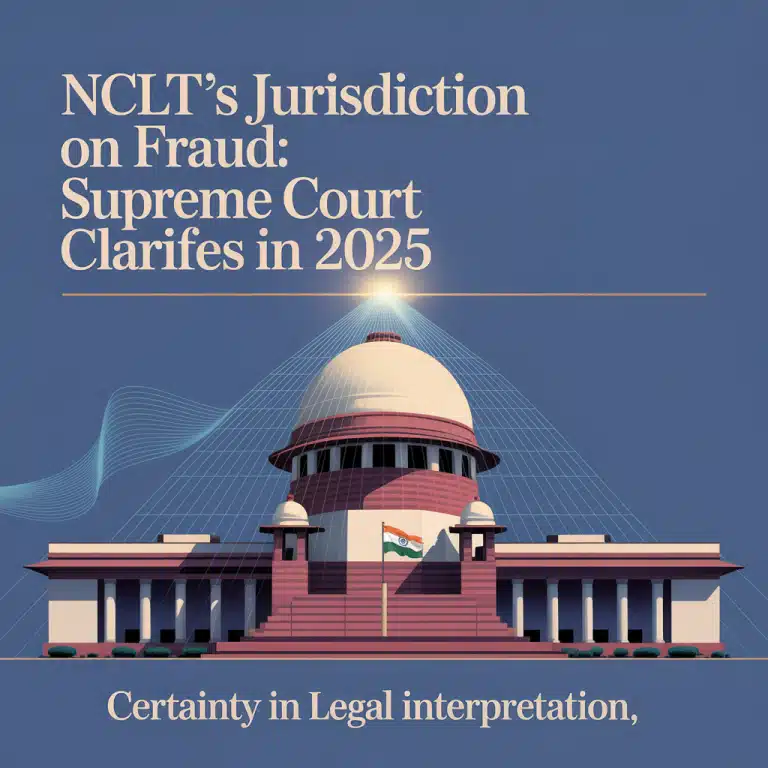
NCLT’s Jurisdiction on Fraud: Supreme Court Clarifies in 2025
Supreme Court Clarifies NCLT’s Jurisdiction on Fraud in Landmark 2025 Ruling The Definitive Ruling on Tribunal Jurisdiction The Supreme Court of India’s judgment in Mrs. Shailja Krishna v. Satori Global Limited, 2025 INSC 1065 marks a pivotal moment in the evolution of Indian corporate law. The ruling conclusively addresses
New RBI KYC Rules Explained: 2025 Amendments
RBI KYC (Amendment) Directions, 2025: A High-Level Legal Analysis The Evolving Legal Framework for KYC in India The legal and regulatory framework for Know Your Customer (KYC) in India is a dynamic system, continuously adapted by the Reserve Bank of India (RBI) to counter financial crimes and align with

Role of Debenture Trustees in India: Legal Analysis of SEBI Master Circular
The Fiduciary Mandate: The Role of Debenture Trustees in the Indian Corporate Debt Market A. Defining the Debenture Trustee: An Agent of Fiduciary Duty A debenture trustee is a legal and financial entity appointed by a company to protect the interests of its debenture holders. This appointment formalizes the trustee’s

Decoding the Companies (Accounts) Second Amendment Rules, 2025
Decoding the Companies (Accounts) Second Amendment Rules, 2025: A Legal and Compliance Analysis This article provides a definitive legal and compliance analysis of the Companies (Accounts) Second Amendment Rules, 2025. Notified by the Ministry of Corporate Affairs (MCA) on May 30, 2025, and effective from July 14, 2025, the amendments
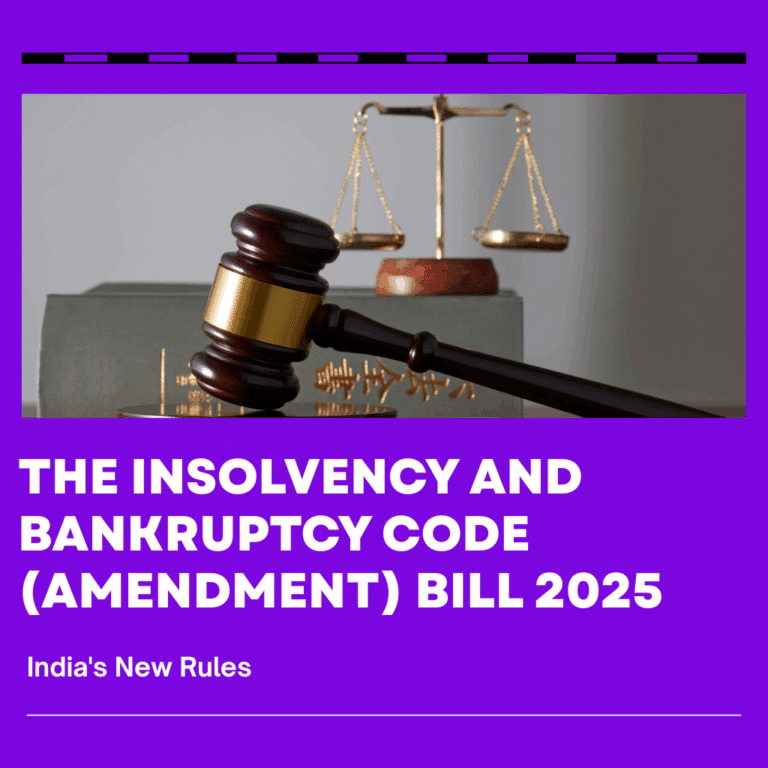
The IBC (Amendment) Bill 2025: India’s New Rules
The Insolvency and Bankruptcy Code (Amendment) Bill 2025: India’s New Rules The Insolvency and Bankruptcy Code (Amendment) Bill, 2025, is a strategic legislative effort launched after three years of extensive consultation to address systemic challenges and align India’s insolvency framework with international standards. The bill expedites resolution timelines by strictly enforcing
Resolving Shareholder Deadlocks: Recent NCLT Rulings in India
Introduction Shareholder deadlocks pose a formidable challenge to corporate governance, particularly in companies with equal or closely held shareholding structures. When shareholders cannot agree on critical decisions, the resulting stalemate can paralyze operations, undermine investor confidence, and threaten the company’s long-term viability. In India, the National Company Law Tribunal (NCLT)

Cross-Border Arbitration in 2025: Adapting to India’s Changing Legal Environment
Drafting the Arbitration Clause in a Contract in Cross-Border Transactions Careful drafting of arbitration clauses in cross-border contracts is paramount under Indian law. Parties must explicitly define the seat of arbitration, the venue (if different for hearings), and the governing law of the contract to avoid jurisdictional ambiguities. Indian courts
Insolvency Meets Antitrust: Supreme Court’s Mandatory CCI Clearance for IBC Resolutions
Introduction The convergence of insolvency and competition laws in India has been thrust into the spotlight by a landmark Supreme Court ruling delivered on January 29, 2025, in the case of Independent Sugar Corporation Ltd. v. Girish Sriram Juneja, 2025 INSC 124. This decision, passed by a 2:1 majority, establishes
Ex-Ante Regulation of SSDEs: Navigating Compliance Challenges Under India’s Digital Competition Bill, 2024
Introduction India’s digital economy is experiencing a transformative surge, positioning the nation as a global leader in digital innovation and connectivity. With a population exceeding 1.4 billion, India boasts over 820 million internet users, making it one of the largest digital markets worldwide. This vast user base is driven by

Microfinance Borrowing Limits in India: Preventing Over-Indebtednes
Introduction Microfinance has revolutionized financial inclusion in India, providing small, collateral-free loans to millions of low-income individuals who are excluded from traditional banking systems. These loans empower people to start small businesses, meet household needs, or invest in education, fostering economic growth and poverty alleviation. However, the rapid expansion of
The Impact of Scale-Based Regulations on Non-Banking Financial Companies (NBFCs) in India
Understanding Non-Banking Financial Companies (NBFCs) Non-Banking Financial Companies (NBFCs) in India are financial institutions registered under the Companies Act, 2013 (earlier under the Companies Act, 1956) that provide a range of financial services similar to banks but do not hold a banking license. The Reserve Bank of India (RBI) defines